
🎾
Plato called her“Tenth Muse”,
and after 2,500 years, her voice remainsbright, direct and honest.
Sappho didn’t just write poetry—she turned emotion into rhythm,
the tension in balance,
desire in motion.
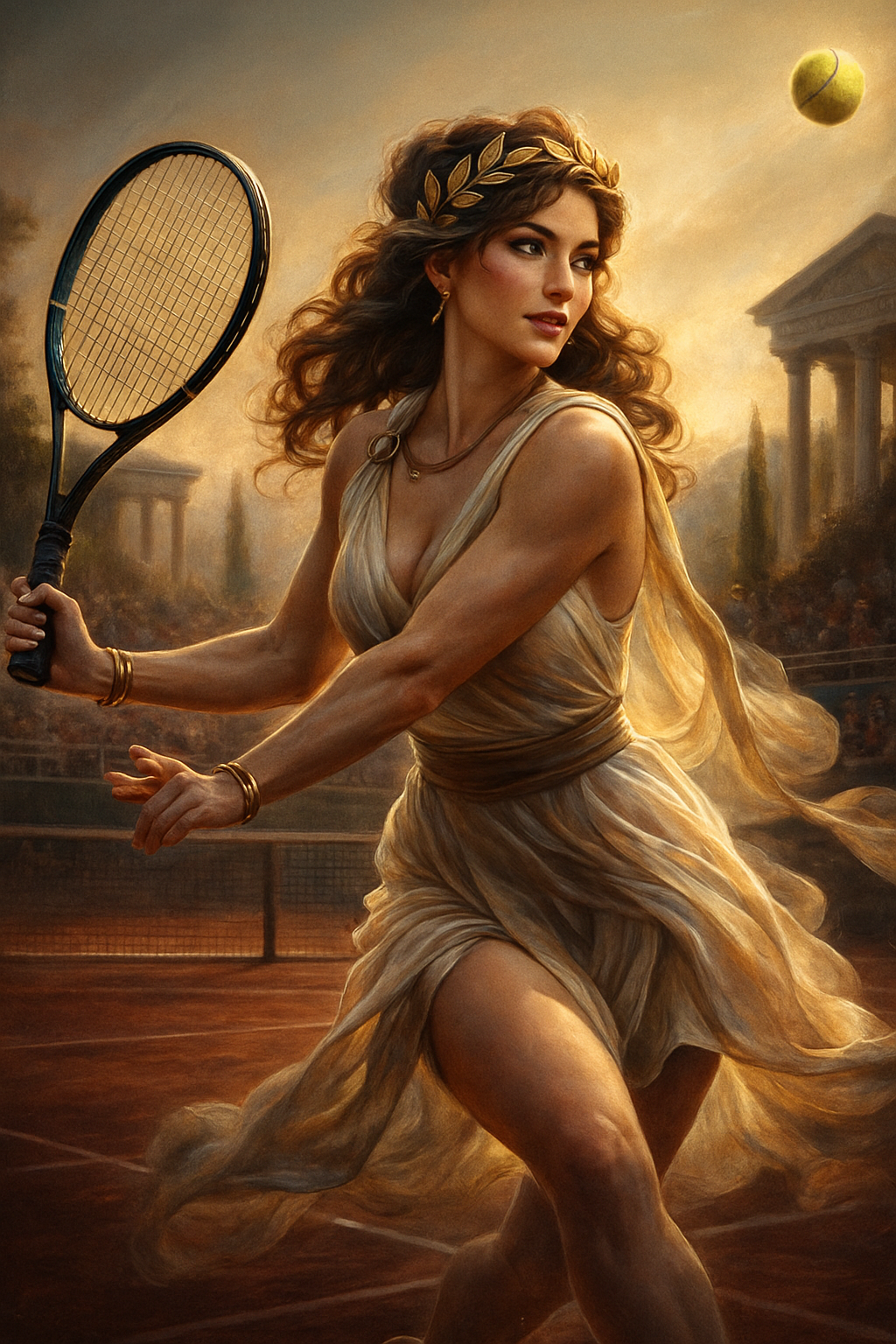
If Sappho played tennis,
would not pursue power—
would listen to himpaceof the game,
she would feel himpulseof the moment
and would respond withharmony and feeling, not with intensity.
💫 Sappho’s tactics are based on three elements:
1. Rhythm is key
As in her lyrics, so in tennis, flow determines success.
The pace player controls the game without pressing.
Sappho would say:“Don’t try to hit harder — try to hit better.”
2. Expression over mechanics
Each beat is a phrase,
every rally a dialogue.
Sappho would not mechanically repeat the same pattern—
would givemeaningat each point.
Movement becomes art only when it carries a personal style.
3. Emotion as energy, not burden
Sappho knew that emotion is power,
if it doesn’t overwhelm you.
On the court, fear, tension or joy can become rhythm,
if you turn them into a concentration.
Sappho would turn stress into music of movement.
🎾 Tennis lesson from Sappho
“Listen to your rhythm before you strike.
When soul and body move together,
the game becomes a poem.”